
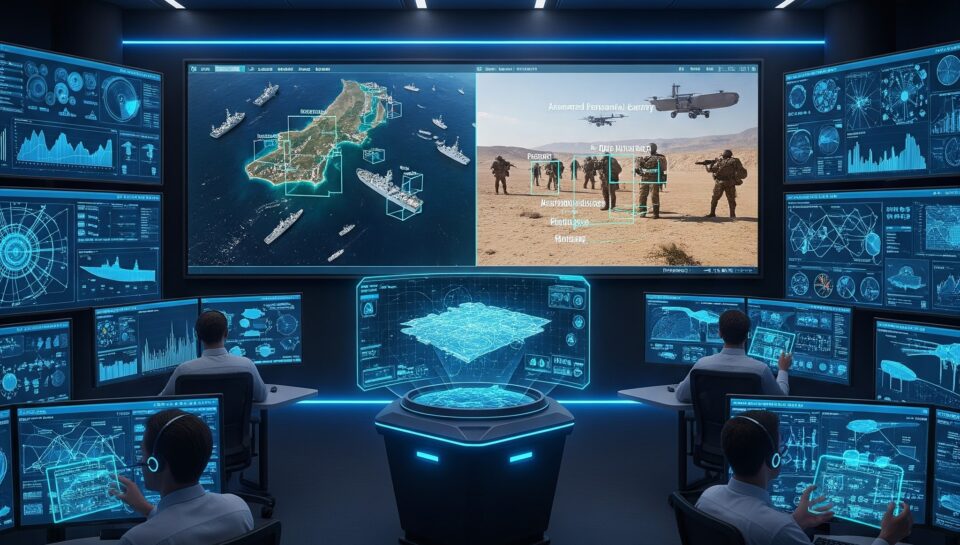
Introduction: The Rise of AI-Powered Defense Systems
From border surveillance to threat detection, the defense sector in the United States is increasingly powered by artificial intelligence. But behind every intelligent defense model lies one critical element — high-quality, precisely labeled data. That’s where defense data annotation USA becomes indispensable.
As AI transforms the way governments, defense contractors, and security firms operate, annotated data ensures that systems are accurate, reliable, and compliant with the nation’s strictest security standards. At Prudent Partners, we specialize in delivering defense-grade annotation services that empower AI systems to identify, predict, and act — with precision and confidentiality.
What Is Defense Data Annotation?
Defense data annotation USA involves labeling and structuring datasets — including satellite imagery, drone footage, sensor readings, and text reports — to train AI models for military and security applications.
Examples include:
- Identifying vehicles, weapons, or infrastructure in aerial imagery.
- Labeling human or object movements in surveillance videos.
- Annotating radar or LiDAR point clouds for object detection.
- Tagging sensitive communications for intelligence analysis.
Every annotation contributes to a model’s ability to recognize patterns and make critical real-time decisions in mission-sensitive environments.
Why Data Annotation Is Mission-Critical in Defense AI
1. Precision Saves Lives
AI systems in defense applications — from autonomous drones to reconnaissance platforms — rely on exact labels to function accurately. An incorrect annotation can result in misidentification and potentially life-threatening consequences.
2. Rapid Threat Detection
Annotated imagery and sensor data help AI models detect threats faster than manual human analysis, improving response time.
3. Enhanced Situational Awareness
Labeled data enables defense organizations to visualize complex scenarios, track movement patterns, and anticipate risks.
4. Secure Decision Support
Annotation ensures that defense-grade AI systems are trained on classified or verified data under strict compliance standards.
5. Long-Term Model Reliability
Continuous annotation and QA cycles ensure defense AI systems evolve as new threats and technologies emerge.
Types of Defense Data Annotation USA
1. Image and Video Annotation
Bounding boxes, polygons, and semantic segmentation are used to identify vehicles, personnel, and installations in satellite or UAV imagery.
2. LiDAR and 3D Sensor Annotation
Critical for terrain mapping, drone navigation, and object recognition under various environmental conditions.
3. Text and Document Annotation
Used in intelligence workflows to tag keywords, sentiment, or named entities in communications and reports.
4. Audio Annotation
Helps AI detect specific sound frequencies or voice patterns in surveillance and communication analysis.
5. Radar Data Labeling
Essential for target tracking, flight path prediction, and automated defense systems.
Challenges in Defense Data Annotation USA
- Data Sensitivity: Handling classified or restricted content under U.S. defense regulations.
- Complexity: Requires multidisciplinary knowledge—engineering, military operations, and AI.
- Security Compliance: Strict adherence to frameworks like ITAR (International Traffic in Arms Regulations).
- Accuracy Thresholds: Annotation quality must exceed 99% to ensure reliable model training.
- Scalability: Processing massive satellite and sensor datasets within tight timelines.
Prudent Partners’ Approach to Secure Defense Annotation
At Prudent Partners, we’ve built our defense data annotation workflows around three pillars: accuracy, confidentiality, and accountability.
1. Certified Security Infrastructure
We operate within ISO 9001 and ISO/IEC 27001 frameworks, ensuring total data confidentiality. Our teams are NDA-bound and trained on secure data handling practices.
2. Multi-Layered QA
Every annotation passes through three or more QA tiers — annotator, reviewer, and defense-trained QA lead — ensuring precision and traceability.
3. Specialized Teams
Annotators undergo domain training in defense image interpretation, object detection, and threat modeling.
4. Prudent PlanWise Oversight
Our proprietary PMS tool, Prudent PlanWise, enables real-time performance visibility, task audits, and KPI tracking.
5. Tool-Agnostic Delivery
We integrate seamlessly with defense clients’ preferred secure annotation tools or proprietary environments.
Use Cases of Defense Data Annotation in the U.S.
Surveillance and Reconnaissance
Labeling satellite and drone imagery to detect unauthorized movements or border intrusions.
Autonomous Systems
Training self-navigating defense drones to recognize terrain, obstacles, and friendly units.
Cyber Threat Detection
Annotating text and log data to identify suspicious activities or infiltration attempts.
Weapon and Object Recognition
Identifying vehicles, artillery, or machinery for automated detection systems.
Disaster Response and Relief
Supporting military assistance operations with annotated mapping data for emergency planning.
Benefits of Defense Data Annotation USA
- Enhanced Threat Visibility: Accurate data labeling strengthens surveillance and monitoring systems.
- Operational Efficiency: AI-enabled automation reduces human error and processing time.
- Predictive Intelligence: Annotated datasets help defense agencies forecast potential risks.
- Confidential Workflows: Data never leaves secure, access-controlled environments.
- Faster Model Training: Structured, QA-verified data accelerates AI readiness.
External Insight: The Defense AI Market in the U.S.
According to Grand View Research, the U.S. defense AI market is projected to exceed $13 billion by 2030, with applications spanning cybersecurity, reconnaissance, and autonomous vehicles. The report highlights that “the success of defense AI depends heavily on annotated and verified training data.”
(Source: Grand View Research – AI in Defense Market)
Why U.S. Defense Clients Choose Prudent Partners
- Trusted by global defense contractors for secure data annotation and QA.
- Dedicated annotation teams for satellite, LiDAR, and multi-sensor projects.
- 100% data confidentiality under ISO-certified protocols.
- 99%+ annotation accuracy backed by structured SOPs.
- Scalable workforce of 300+ analysts for rapid project turnaround.
- Compliance-ready infrastructure supporting ITAR and DFARS-aligned workflows.
Prudent Partners doesn’t just label data—we enable intelligence. Our defense-focused annotation teams ensure every dataset contributes to safer, smarter, and faster decision-making.
Internal Links: Explore Related Prudent Partners Services
Conclusion: Building Safer Systems Through Data Precision
The future of defense intelligence is powered by clean, well-annotated data. As the U.S. invests in next-generation defense systems, defense data annotation USA serves as the foundation that makes automation safe, accurate, and effective.
At Prudent Partners, we’re proud to contribute to this mission — providing annotation workflows built on precision, trust, and confidentiality. From reconnaissance to cybersecurity, our data experts help ensure that every decision is backed by clarity, not uncertainty.
FAQs
1. What is defense data annotation?
It’s the process of labeling defense-related datasets — imagery, audio, and documents — to train AI systems.
2. How does Prudent Partners ensure data security?
Through ISO/IEC 27001-certified infrastructure, NDAs, and ITAR-compliant workflows.
3. What industries benefit from defense data annotation?
Defense contractors, aerospace firms, intelligence agencies, and cybersecurity organizations.