
The success of any computer vision model hinges on the quality of its training data. High-quality, accurately labeled images are the foundational asset for building reliable artificial intelligence systems, from autonomous vehicles navigating complex environments to medical algorithms detecting pathologies in diagnostic scans. Yet, the process of annotating this data is notoriously complex and resource intensive. Selecting the right platform from the vast landscape of image annotation tools can feel like a significant project in itself, often leading to analysis paralysis for even experienced AI and ML teams.
This guide is designed to cut through the noise and simplify that critical decision. We provide a comprehensive, curated list of the top 12 annotation platforms, ranging from powerful open-source solutions like CVAT and Label Studio to enterprise-grade systems such as Labelbox and Scale AI. Each review goes beyond a simple feature list, offering a detailed analysis of core capabilities, ideal use cases by industry, and crucial considerations for scalability and integration. You will find screenshots, direct links, and practical insights to help you visualize how each tool fits into your workflow.
Our goal is to give you a clear framework for evaluation. You will learn to assess whether an in-house tool is sufficient or if partnering with a specialized, high-accuracy annotation service is the more strategic path. By understanding the strengths and limitations of the market's leading image annotation tools, you can ensure your data pipeline becomes a dependable asset that accelerates model development, not a persistent bottleneck that hinders progress and inflates budgets. This resource will help you match your project's specific accuracy, timeline, and compliance requirements to the optimal solution.
1. Labelbox
Labelbox positions itself as a comprehensive data development platform, extending beyond simple labeling to encompass dataset curation, model error analysis, and active learning workflows. It is a mature, enterprise-ready solution designed for teams that require a scalable and secure environment for building high-quality training data. The platform’s strength lies in its ability to manage the entire data-centric AI lifecycle, making it one of the most robust image annotation tools for established machine learning operations.
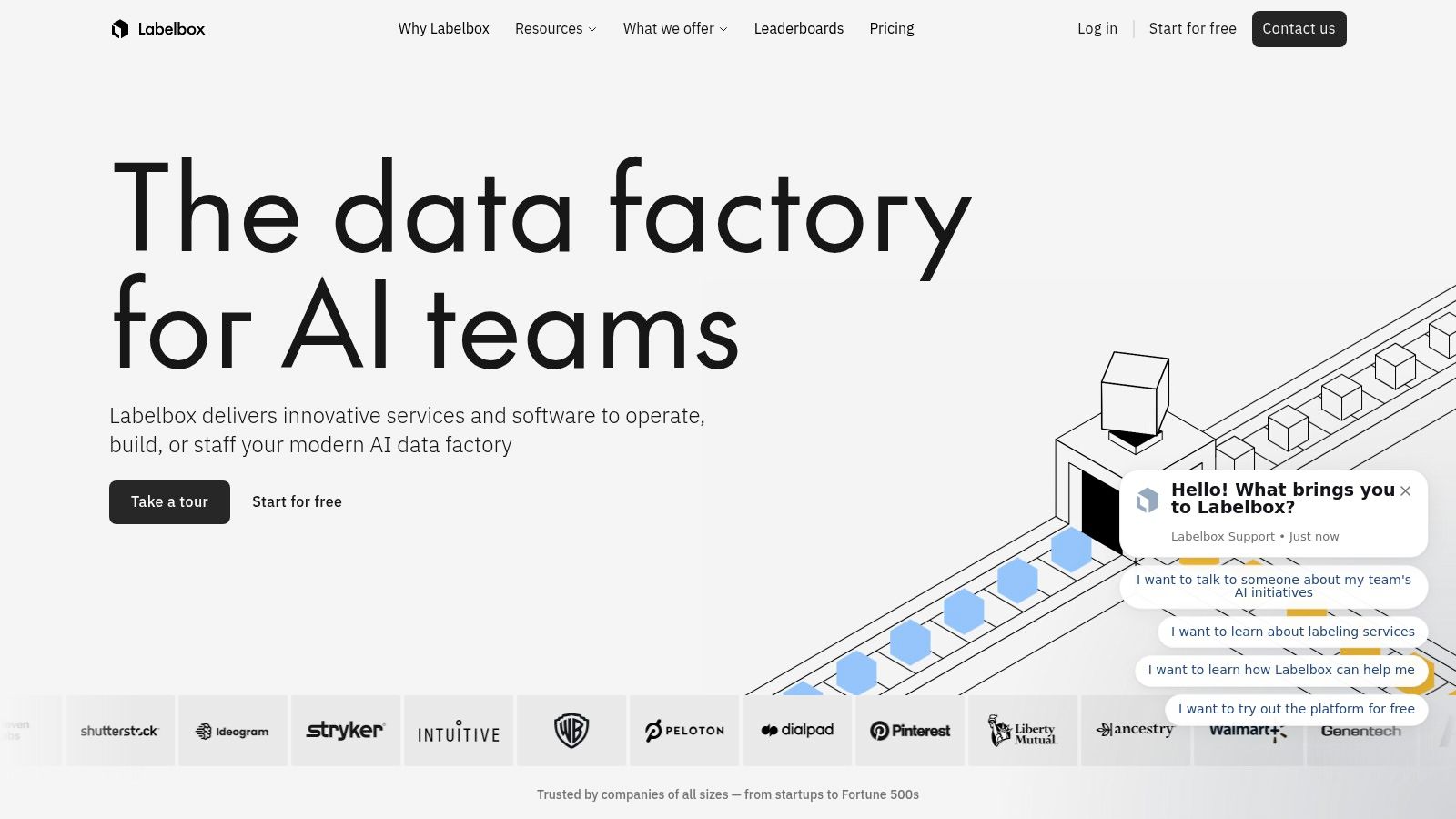
It supports a wide array of data types, including images, video, text, documents, and geospatial data, offering a unified environment for multimodal projects. This versatility is particularly beneficial for complex applications, such as autonomous vehicle perception systems that combine camera, LiDAR, and radar data, or medical AI that analyzes both DICOM images and clinical notes.
Key Features & Use Cases
Labelbox provides a highly configurable editor that supports bounding boxes, polygons, semantic segmentation masks, keypoints, and complex relationships between labels. Its model-assisted labeling and automated data labeling features significantly accelerate annotation by using your own models to pre-label data, leaving human annotators to focus on corrections and edge cases.
- Best For: Large-scale, multi-modal data projects in enterprises needing robust security, collaboration features, and a unified data engine.
- Industry Fit: Excellent for autonomous vehicles, medical imaging, and geospatial intelligence where data complexity and security are paramount.
- Pricing: A free tier is available for individuals and small teams to explore core features. Paid plans (Pro, Enterprise) are priced by quote and offer advanced features like SSO, on-premise deployment, and API access.
Our Take: Labelbox excels at managing data complexity at scale. Its powerful data curation tools, which allow you to search and filter datasets based on metadata, annotations, or even model predictions, are a significant differentiator for teams needing to debug models and improve data quality systematically.
Website: https://labelbox.com
2. Roboflow
Roboflow offers an end-to-end computer vision platform that streamlines the journey from data annotation to model deployment. It is designed to be an accessible yet powerful solution, particularly for developers and small teams looking to build and iterate on computer vision models quickly. The platform tightly integrates annotation, dataset management, and model training, making it one of the most practical image annotation tools for projects that require a fast development cycle.
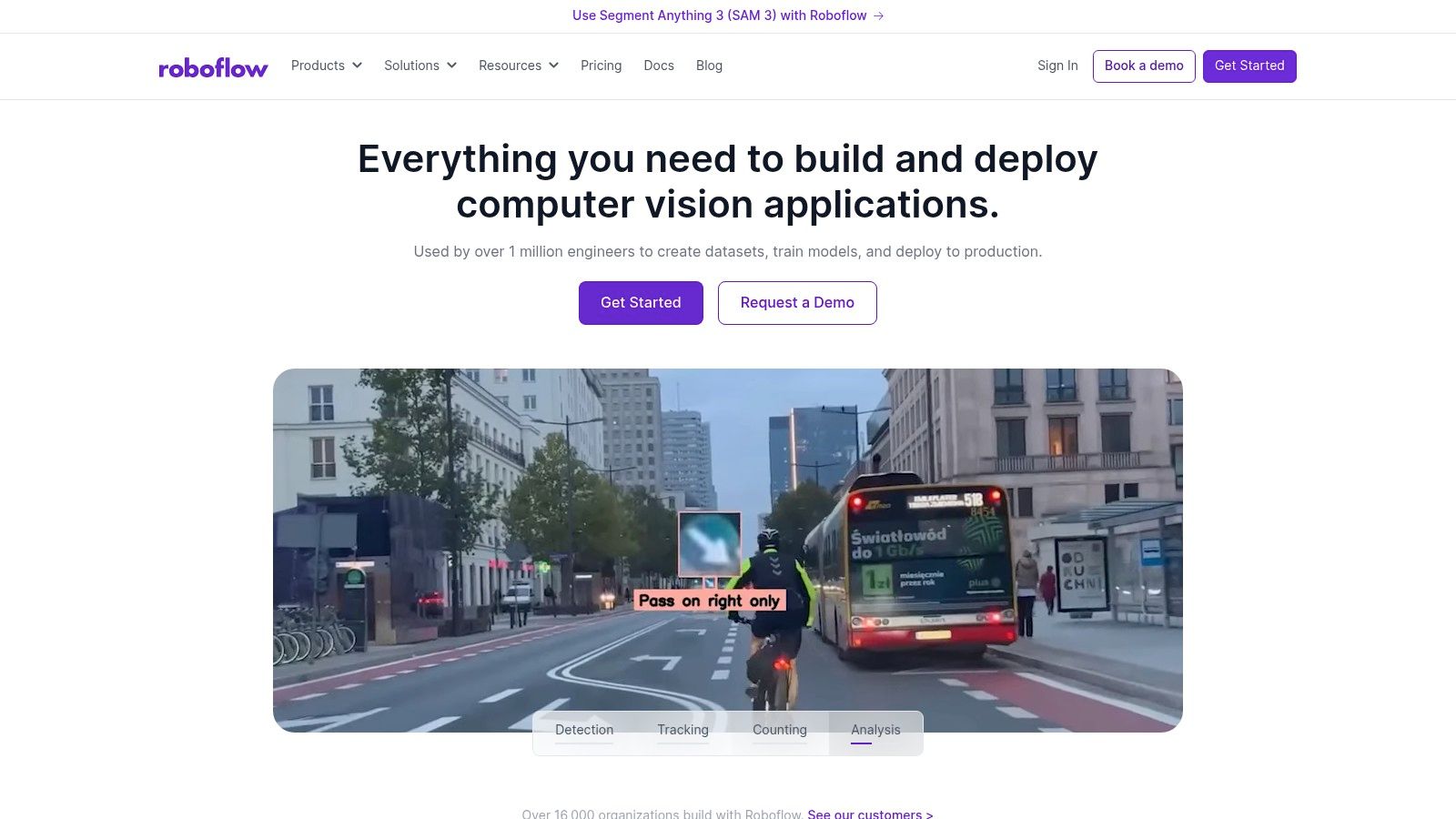
It provides a suite of tools that not only facilitate labeling but also help manage and augment datasets to improve model performance. Roboflow’s emphasis on a seamless workflow, from uploading raw images to deploying a trained model via API, distinguishes it as a highly efficient platform for building production-ready computer vision applications without extensive infrastructure setup.
Key Features & Use Cases
Roboflow Annotate supports bounding boxes, polygons, and segmentation with integrated team workflows for assignment and review. Its key differentiator is the deep integration with dataset health checks, preprocessing, and augmentation steps, allowing users to balance classes or generate new training examples directly within the platform. The platform also offers managed labeling services with published per-annotation rates for teams needing to scale annotation work.
- Best For: Individuals, startups, and teams needing a rapid, all-in-one platform for labeling, training, and deploying computer vision models.
- Industry Fit: Well-suited for e-commerce, agriculture, and hobbyist projects where quick iteration and ease of use are critical.
- Pricing: A generous free Public tier is available. Paid plans (Starter, Pro) offer private projects and more advanced features, with a credit-based system for usage.
Our Take: Roboflow excels at making the entire computer vision pipeline accessible. Its integrated approach, which takes you from annotation to a deployable API in one place, significantly lowers the barrier to entry for building real-world applications. The transparent pricing and managed labeling options make it easy to start small and scale as needed.
Website: https://roboflow.com
3. CVAT (CVAT Online and Enterprise)
CVAT, or Computer Vision Annotation Tool, has grown from a popular open-source project into a powerful platform with both hosted SaaS (CVAT.ai) and on-premise Enterprise options. It bridges the gap between individual research and scalable team operations by offering a rich, familiar annotation environment backed by commercial support. This flexibility makes it one of the most versatile image annotation tools, catering to users who appreciate the control of open source but require the stability and features of a managed service.
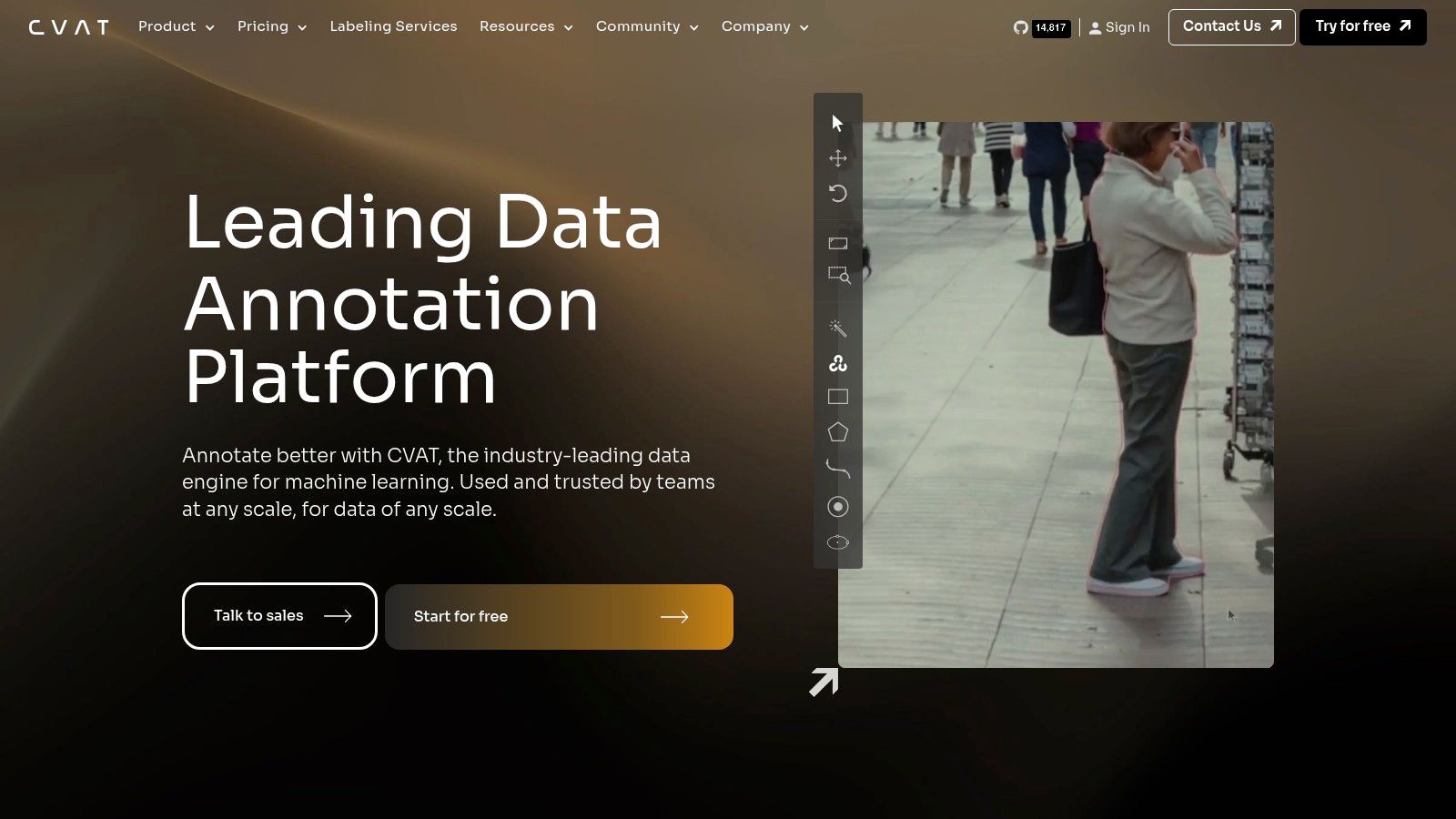
The platform is recognized for its comprehensive toolbox that handles images and videos with equal proficiency. It supports a wide range of annotation types from basic bounding boxes to complex 3D cuboids and skeletal keypoints. Its strong foundation in the open-source community means it benefits from extensive format support and integrations, ensuring compatibility with most machine learning frameworks.
Key Features & Use Cases
CVAT provides a fast and responsive editor designed for high-throughput labeling, including object tracking in videos. The integration of serverless functions (like Nuclio) allows users to deploy AI models for automated pre-labeling, significantly reducing manual effort. The tool's project management and analytics capabilities help teams monitor progress and quality. The full spectrum of image annotation services available through platforms like this can accelerate project timelines.
- Best For: Teams that started with the open-source version and are looking to scale with professional support, security, and managed infrastructure.
- Industry Fit: Well-suited for academic research, robotics, and video analysis due to its strong video tracking and diverse annotation capabilities.
- Pricing: A generous free tier is available for individuals and small projects. Paid tiers (Pro, Enterprise) offer advanced team management, security, automation, and support on a per-user basis or via a custom quote.
Our Take: CVAT's primary advantage is its seamless migration path from a widely used open-source tool to a fully supported enterprise platform. The familiar UI lowers the learning curve, while the commercial offerings provide the necessary security, collaboration, and automation features required for professional MLOps workflows.
Website: https://www.cvat.ai
4. Label Studio (by HumanSignal)
Label Studio, managed by HumanSignal, is a highly popular open-source data labeling platform known for its extreme flexibility and strong community backing. It empowers teams to annotate a wide variety of data types, including images, text, audio, and time-series data, all through a single, highly configurable interface. This adaptability makes it one of the most versatile image annotation tools for projects that require custom labeling UIs or integration into unique, complex data pipelines.
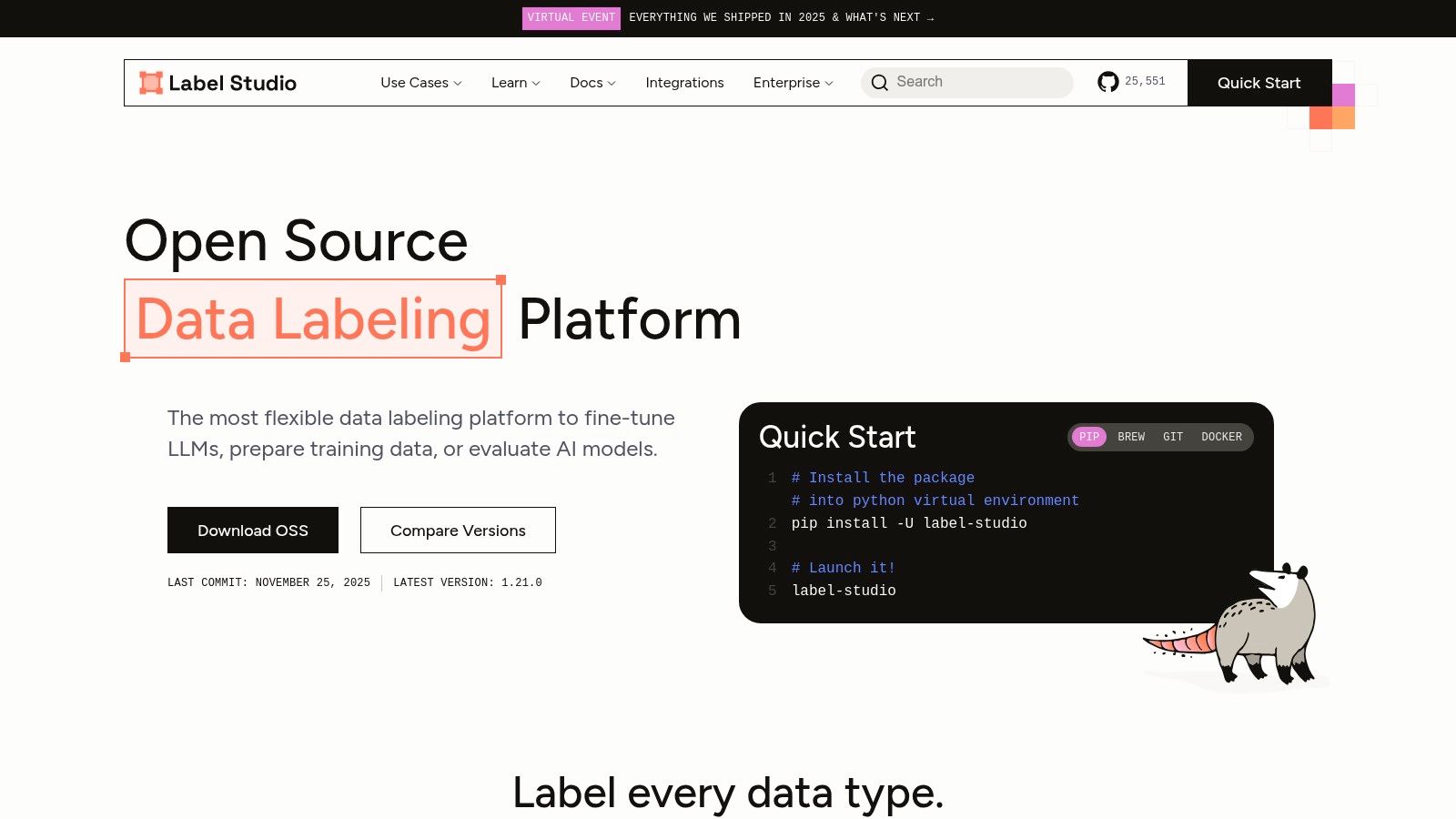
The platform's core strength is its customizable front-end, which allows users to build tailored annotation interfaces using simple declarative tags. This is ideal for niche use cases or multi-step labeling workflows that standard tools cannot easily accommodate. With both a powerful self-hosted open-source version and a managed cloud offering, it serves a wide spectrum of users from individual researchers to large enterprises needing robust security and compliance.
Key Features & Use Cases
Label Studio supports everything from simple bounding boxes and polygons to more complex multi-object relations and semantic segmentation. Its design facilitates active learning loops, where a model can be connected directly to the labeling interface to pre-annotate data and continuously retrain, focusing human effort on the most challenging examples. Enterprise-grade features like SSO, role-based access control (RBAC), and quality management workflows are available in its managed cloud plans.
- Best For: Teams needing a highly customizable labeling interface and the flexibility of an open-source solution, with the option to scale to a managed enterprise cloud.
- Industry Fit: Well-suited for academic research, NLP projects, and companies that need to build bespoke annotation workflows for unique data types or active learning pipelines.
- Pricing: A generous open-source version is free forever. The managed "Starter" cloud plan offers an affordable entry point for small teams, while the Enterprise tier provides advanced security, support, and compliance (SOC2/HIPAA) on a quote basis.
Our Take: Label Studio's configurability is its killer feature. The ability to define exactly how data is presented and what labeling tools are available gives data science teams complete control over the annotation process, which is invaluable for specialized or experimental projects.
Website: https://labelstud.io
5. Supervisely
Supervisely presents itself as an end-to-end computer vision platform designed for the entire AI lifecycle, from data collection and annotation to model training and deployment. It stands out with its highly modular architecture, centered around an "Ecosystem" of apps that allows teams to customize their workflows extensively. This app-based approach offers a unique level of flexibility, making it one of the most adaptable image annotation tools for teams that want to build bespoke data pipelines without starting from scratch.
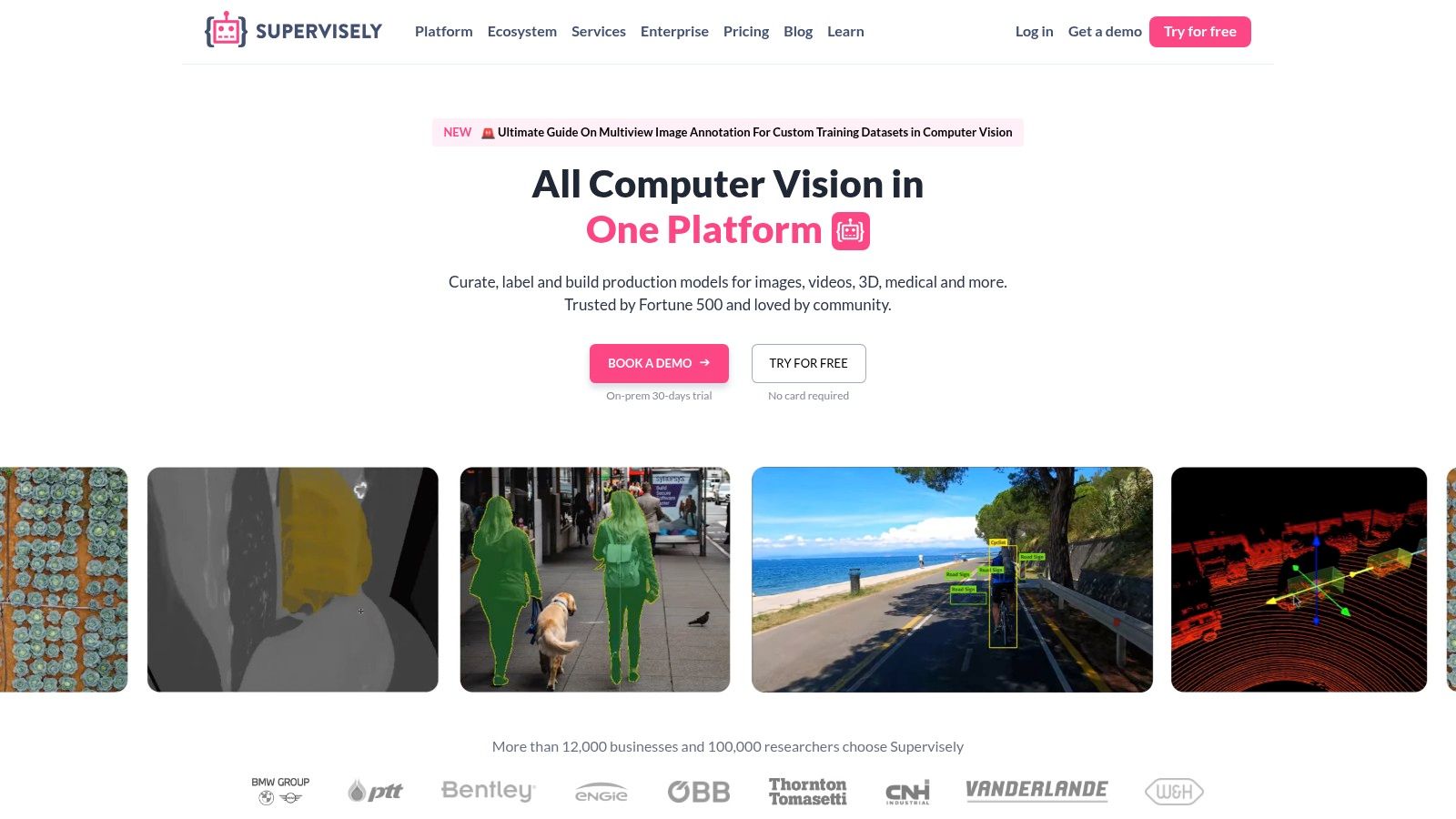
The platform supports a comprehensive range of data types, including images, videos, 3D point clouds (LiDAR), and medical imaging formats like DICOM and NIfTI. Its powerful editors are equipped with AI-assisted tools that accelerate labeling tasks, while integrated features for quality assurance, such as consensus workflows and labeling exams, ensure high-quality output. The ability to deploy on-premise provides an added layer of security for organizations with strict data governance requirements.
Key Features & Use Cases
Supervisely offers advanced editors for 2D, 3D, and medical annotation, supporting everything from simple bounding boxes to complex volumetric segmentation. Its marketplace of integrated apps allows users to add functionality for data transformation, neural network integration, and custom reporting. The platform also includes detailed activity logs and consensus workflows, which are crucial for managing large annotation teams and maintaining data quality.
- Best For: R&D and ML teams seeking a highly customizable, all-in-one platform that can be self-hosted for maximum data control.
- Industry Fit: Strong for medical AI, autonomous systems (LiDAR/3D data), and research institutions that require specialized and extensible toolsets.
- Pricing: A free Community Edition is available with user and storage limits. Paid plans (Startup, Business, Enterprise) offer expanded features, with transparent pricing in EUR and optional add-on packs.
Our Take: The Supervisely Ecosystem is its most compelling feature. Instead of a one-size-fits-all tool, it provides a flexible foundation that can be extended with specific apps for data import, AI-assisted labeling, or model integration. This makes it a powerful choice for teams with unique or evolving project requirements.
Website: https://supervisely.com
6. Encord
Encord presents itself as a data development platform designed for building high-quality training data with a strong emphasis on automation, quality control, and model evaluation. It provides a powerful environment for both image and video annotation, making it a go-to solution for teams that require granular control over their data pipelines and verifiable data quality. The platform is particularly known for its robust workflow management and compliance features, positioning it as one of the leading image annotation tools for regulated industries.

It supports complex and nested ontologies, allowing for intricate classifications essential in specialized fields. Encord's capability extends beyond simple images to include video, DICOM, and other data modalities, providing a unified workspace for multifaceted AI projects. This is crucial for applications in medical AI, which often require analysis of multiple imaging types, or in agriculture technology where video analysis is key.
Key Features & Use Cases
Encord’s editor supports advanced automation features, including object tracking and Segment Anything Model (SAM) integration, to accelerate labeling tasks. Its customizable workflows, consensus scoring, and detailed performance analytics give teams the tools to manage quality at scale. The platform also offers flexible deployment options, catering to organizations with strict data residency or security requirements.
- Best For: AI teams in regulated industries that need auditable quality control, customizable workflows, and enterprise-grade security for sensitive data.
- Industry Fit: A strong choice for medical imaging (HIPAA compliant), agriculture, and insurance, where data accuracy and process transparency are critical.
- Pricing: Offers a free Starter plan for individuals and small projects. The Team and Enterprise tiers are quote-based, providing advanced collaboration, security, and deployment features.
Our Take: Encord stands out with its comprehensive quality assurance and workflow automation capabilities. For organizations needing to enforce strict annotation protocols and track labeler performance with precision, its built-in consensus mechanisms and review stages are invaluable for ensuring dataset integrity.
Website: https://encord.com
7. V7 (Darwin)
V7 presents its Darwin platform as an intelligent data development environment built for enterprise-scale computer vision projects. It moves beyond basic labeling by integrating AI-assisted annotation, MLOps workflows, and data management into a single, cohesive system. Its primary strength is in handling complex, high-volume image and video data, particularly within the life sciences and industrial sectors, making it a leading choice among image annotation tools for specialized applications.
The platform is engineered to accelerate the annotation process through powerful automation features, including model-assisted labeling and automated object tracking in video. V7 supports a variety of data types, with advanced functionalities for medical imaging formats like DICOM and NIfTI, which is crucial for building robust healthcare AI solutions that demand precision and compliance.
Key Features & Use Cases
V7's toolset is distinguished by its AI-powered features, such as "Auto-Annotate," which can segment entire images with a single click. It provides granular control over workflows with role-based access, comprehensive APIs for integration, and detailed analytics to monitor annotator performance and data quality. The platform also offers an optional AutoML component to train and deploy models directly from labeled data.
- Best For: Large enterprises in life sciences and industrial automation that require a unified platform for data labeling, model training, and MLOps.
- Industry Fit: A strong fit for medical imaging (radiology, pathology), pharmaceutical research, and manufacturing quality control where accuracy and scalability are critical.
- Pricing: A free plan with limited usage is available for individual users. Team, Business, and Pro plans are priced via custom quotes, tailored to data volume and feature requirements.
Our Take: V7 stands out for its deep specialization in complex computer vision domains, particularly healthcare. Its advanced support for medical data modalities and built-in automation capabilities create a powerful, efficient environment for teams working on mission-critical AI applications where annotation speed and accuracy cannot be compromised.
Website: https://www.v7labs.com
8. Dataloop
Dataloop provides a unified platform for both annotation and data management, designed to handle the entire data lifecycle for AI. It combines powerful tooling with serverless automation pipelines and an integrated network of labeling services, positioning itself as an end-to-end solution for large-scale operations. This integrated approach, which pairs a sophisticated software platform with managed workforce options, makes it a notable choice among image annotation tools for teams looking to streamline their vendor relationships.
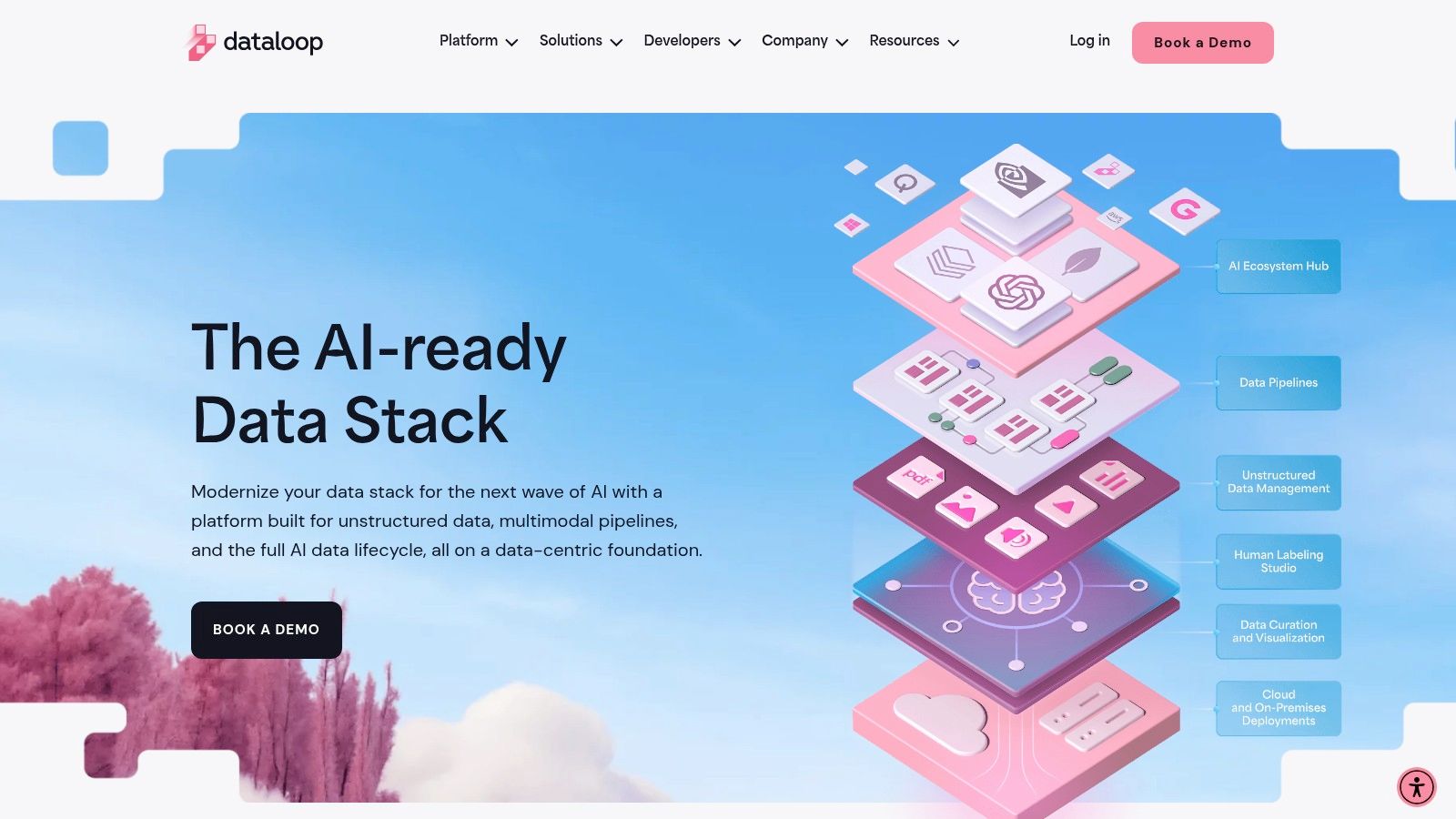
The platform supports a comprehensive set of annotation types for both image and video data, complete with multi-step quality assurance and verification workflows. Its serverless automation features, accessible via SDKs, allow ML teams to build custom data processing pipelines that can automate tasks, pre-label data, or trigger QA checks, significantly boosting operational efficiency as projects scale to millions of items.
Key Features & Use Cases
Dataloop's key differentiator is its seamless blend of a self-serve platform with optional managed annotation services. The platform includes robust workforce and vendor management tools, plus usage dashboards to monitor consumption and quotas. This gives teams the flexibility to use their own annotators, bring in a preferred vendor, or tap into Dataloop's vetted network, all within a single environment.
- Best For: Organizations that need a single vendor for both annotation software and a managed workforce, with the ability to scale to massive datasets.
- Industry Fit: Ideal for computer vision teams in retail, agriculture, and smart cities that require flexible workforce management and automated data pipelines.
- Pricing: Pricing is customized and available upon request via a demo. The documentation-first approach to billing may require direct engagement for clarity.
Our Take: Dataloop’s strength lies in its operational flexibility. The ability to manage internal teams, external vendors, and their own managed workforce in one place provides a unique advantage for companies whose needs may change over time, preventing vendor lock-in.
Website: https://dataloop.ai
9. Kili Technology
Kili Technology provides a sophisticated data-labeling platform designed for enterprise-grade AI projects involving images, videos, and documents. The platform emphasizes robust workflow management, quality assurance protocols, and stringent security, making it a strong contender for organizations with strict compliance requirements. It integrates a powerful API and Python SDK to streamline data pipelines, positioning it as one of the more developer-friendly image annotation tools for teams needing to build custom automation and integrations.
Its architecture is built to support complex annotation tasks while providing clear auditing trails and permissions management. This allows businesses to effectively manage mixed workforces, combining internal teams with external vendors on a single, secure platform. The availability of on-premise deployment options further solidifies its appeal for sectors handling highly sensitive data, such as finance and healthcare.
Key Features & Use Cases
Kili offers a full suite of annotation types and a collaborative environment tailored for quality control. Features like consensus scoring, issue tracking, and detailed performance analytics help teams maintain high standards of accuracy across large datasets. The platform’s flexible add-on model for storage, seats, and professional services allows it to scale alongside project demands.
- Best For: Enterprises in regulated industries needing a secure, compliant, and scalable data labeling solution with strong API support.
- Industry Fit: Ideal for financial services, insurance, and medical AI where compliance (SOC2, ISO 27001, HIPAA) and data privacy are non-negotiable.
- Pricing: A free trial is available to test the platform. Paid plans are quote-based and tailored to specific enterprise needs, requiring sales engagement for detailed pricing.
Our Take: Kili Technology stands out for its enterprise readiness and commitment to security. Its strong compliance posture and on-premise options are critical differentiators for companies that cannot risk data exposure. The platform is an excellent choice for organizations that need a secure, auditable, and highly customizable annotation environment.
Website: https://kili-technology.com
10. AWS – Amazon SageMaker Ground Truth
Amazon SageMaker Ground Truth is a fully managed data labeling service that makes it easy to build highly accurate training datasets for machine learning. For teams already embedded in the Amazon Web Services (AWS) ecosystem, it offers unparalleled integration with services like S3, IAM, and the core SageMaker ML platform. This native connection simplifies data pipelines, security, and billing, positioning it as one of the most convenient image annotation tools for existing AWS customers.
The service is designed as a human-in-the-loop capability, allowing you to manage public, private, and third-party vendor workforces within a single interface. Ground Truth provides built-in labeling workflows for images, video, text, and 3D point cloud data, along with options to create custom UIs. Its key value is streamlining the entire data preparation process from a single, scalable, and secure cloud console.
Key Features & Use Cases
Ground Truth supports assisted labeling features like auto-segmentation to accelerate annotation tasks. It also provides robust quality control mechanisms, including annotation consolidation and review workflows, to ensure dataset accuracy. The workforce management options are highly flexible, giving you the choice between using your own employees, Amazon Mechanical Turk for public crowdsourcing, or curated vendors available through the AWS Marketplace.
- Best For: Companies deeply integrated with the AWS cloud stack looking for a scalable, pay-as-you-go data labeling solution.
- Industry Fit: Broadly applicable across industries, especially for enterprises in finance, retail, and technology that already leverage AWS for their infrastructure.
- Pricing: Follows a pay-as-you-go model. Costs are based on the number of objects labeled and the workforce chosen. Pricing can be complex to estimate upfront and depends heavily on the specific labeling job.
Our Take: The primary advantage of SageMaker Ground Truth is its native integration. For teams managing their entire ML lifecycle on AWS, it eliminates the friction of moving data and managing separate vendor contracts. The ability to seamlessly scale from a small pilot to a massive labeling program within a familiar environment is its strongest selling point.
Website: https://aws.amazon.com/sagemaker/groundtruth/
11. Scale AI
Scale AI is a major enterprise player in the data services market, offering a platform that combines high-quality managed annotation with tools for data evaluation and Generative AI customization. It caters to organizations that require massive volumes of accurately labeled data for mission-critical AI applications. The platform's core strength is its ability to handle complex specifications and large-scale projects across image, video, and text modalities, making it a go-to for many leading AI companies.
Scale AI provides a dual-offering model that serves different project stages. Its self-serve "Rapid" product allows teams to quickly launch pilot projects and experiment with smaller datasets. For larger, ongoing needs, it offers fully managed labeling programs that provide a dedicated workforce and project management, a structure that many U.S. companies use to build reliable AI models. This flexibility makes it one of the most versatile image annotation tools for both startups and established enterprises.
Key Features & Use Cases
The platform is known for its test and evaluation tools for both computer vision and large language models (LLMs), allowing teams to assess model performance beyond simple accuracy metrics. Its managed service is built on a foundation of rigorous quality control and can be tailored to unique project requirements, from autonomous vehicle sensor fusion to intricate content moderation policies.
- Best For: Enterprises requiring proven, high-volume, and complex annotation programs with an option for self-serve pilots.
- Industry Fit: A strong choice for autonomous vehicles, generative AI development, government, and large-scale e-commerce operations.
- Pricing: The self-serve Rapid product has transparent pricing. Enterprise plans for managed services are quote-based and tailored to project scope and complexity.
Our Take: Scale AI’s primary differentiator is its proven track record in executing some of the largest and most complex data annotation projects in the industry. The ability to start with a self-serve tool and graduate to a fully managed program offers a seamless scaling path for growing AI initiatives.
Website: https://scale.com
12. CloudFactory
CloudFactory distinguishes itself by providing a managed data annotation workforce rather than just a software platform. It offers a "workforce-plus-tech" model, ideal for organizations that need a reliable, scalable, and compliant team for computer vision tasks without building an in-house operation. This approach combines human expertise with process management, making it a strong partner for businesses requiring consistent, high-quality data labeling with service-level agreements (SLAs).
The service is highly flexible, allowing clients to either use CloudFactory's provided toolset or bring their own tool (BYOT). This adaptability makes it easier to integrate their workforce into existing MLOps pipelines. Their focus on security and compliance, with certifications like SOC 2, HIPAA, and ISO, provides essential assurance for projects involving sensitive data, a critical factor when choosing a data annotation partner.
Key Features & Use Cases
CloudFactory's core offering is its vetted, managed teams that handle various annotation tasks under a clear engagement structure. They begin with a free analysis of sample data to scope the project and ensure alignment on quality and throughput expectations. This model is built to accelerate both the initial bootstrapping of a project and ongoing annotation needs.
- Best For: Organizations needing a scalable, compliant, and managed human workforce for steady, high-volume annotation projects.
- Industry Fit: Strong in sectors requiring strict compliance like healthcare (HIPAA) and finance (SOC 2), as well as any large-scale AI project needing a dependable data pipeline.
- Pricing: Pricing is customized based on project scope, with flexible models like consumption-based or per-object rates. Engagements often involve annual commitments after a sample analysis.
Our Take: CloudFactory is an excellent choice when your primary bottleneck is workforce capacity and management, not tooling. The ability to supply a vetted, US-compatible team with guaranteed quality and security makes it a powerful accelerator for companies that prefer to focus on model development rather than annotation logistics.
Website: https://www.cloudfactory.com
Top 12 Image Annotation Tools Comparison
| Platform | Key features ✨ | Quality ★ | Pricing 💰 | Target audience 👥 | USP 🏆 |
|---|---|---|---|---|---|
| Labelbox | ✨ Configurable image editor, auto-label, dataset curation | ★★★★☆ Enterprise-grade security & scale | 💰 Free tier; many enterprise features add-on / quote | 👥 Startups → Enterprises | 🏆 Mature platform + optional managed teams |
| Roboflow | ✨ Roboflow Annotate, dataset→deployment pipeline | ★★★★ Easy onboarding; integrated deploy | 💰 Transparent self-serve plans; credits model | 👥 Small teams → Growth startups | 🏆 Tight labeling → model deployment flow |
| CVAT (Online/Enterprise) | ✨ Rich OSS editor, auto-annotation, broad exports | ★★★★☆ Fast editor; self‑host option | 💰 Free/community; paid SaaS & enterprise | 👥 OSS users, teams needing on‑prem | 🏆 Open-source with enterprise/on‑prem path |
| Label Studio | ✨ Flexible task UIs for image/text/audio, active learning | ★★★★ Strong community & configurable | 💰 Free OSS; Starter Cloud paid | 👥 Teams needing custom workflows | 🏆 Highly configurable + compliance options |
| Supervisely | ✨ 2D/3D/medical editors, QA, apps marketplace | ★★★★ Versatile modality & QA tools | 💰 Plans in EUR; free plan limits | 👥 Medical, 3D, enterprise CV teams | 🏆 Advanced 3D/medical tooling & marketplace |
| Encord | ✨ Complex ontologies, analytics, automation (SAM2) | ★★★★ Strong QA & regulated-use features | 💰 Starter/Team/Enterprise; quote for enterprise | 👥 Regulated industries & enterprises | 🏆 Workflow-first QA for compliance use cases |
| V7 (Darwin) | ✨ AI-assisted annotation, tracking, MLOps | ★★★★ Enterprise-grade for scale & healthcare | 💰 Quote-based; limited free tier | 👥 Life sciences & industrial CV | 🏆 Scalable vision ops with medical focus |
| Dataloop | ✨ Serverless automation, SDK, workforce mgmt | ★★★★ Scales to tens of millions of items | 💰 Demo/quote-based pricing | 👥 Large-scale annotation programs | 🏆 Software + integrated managed workforce |
| Kili Technology | ✨ API/SDK, auditing, on‑prem & RBAC | ★★★★ Strong compliance (ISO/SOC2/HIPAA) | 💰 Free trial; enterprise quotes | 👥 Sensitive-data/compliant enterprises | 🏆 Compliance-first with flexible workforce mix |
| AWS SageMaker Ground Truth | ✨ Native AWS integration (S3/IAM/VPC), HITL | ★★★★ Scales within AWS; native governance | 💰 Pay-as-you-go; costs vary by workload | 👥 AWS-centric enterprises & cloud teams | 🏆 Deep AWS ecosystem integration & controls |
| Scale AI | ✨ Managed annotation, Rapid pilots, LLM/CV eval | ★★★★★ Proven at very large volumes & quality | 💰 Sales-led enterprise pricing | 👥 Large enterprises with complex specs | 🏆 High-volume accuracy & full managed services |
| CloudFactory | ✨ Managed annotation workforce, SLAs, BYOT | ★★★★ Reliable vetted teams & compliance | 💰 Custom pricing; consumption or per-object models | 👥 Organizations needing managed workforce | 🏆 Workforce-as-a-service with compliance guarantees |
From Tools to Talent: When to Partner for Precision Annotation
Navigating the landscape of modern image annotation tools reveals a powerful truth: the most sophisticated software is only as effective as the human talent operating it. Throughout this guide, we have explored a comprehensive array of platforms, from open-source powerhouses like CVAT and Label Studio to enterprise-grade solutions such as Labelbox, V7, and Encord. Each offers a unique combination of features, automation capabilities, and integration potential, catering to diverse needs across industries like autonomous vehicles, medical AI, and geospatial intelligence.
However, selecting the right tool is just the first step. The real challenge, and the primary determinant of your model's performance, lies in achieving consistently high accuracy across vast datasets. This is where the operational complexities of data annotation become apparent. Managing an in-house annotation team involves significant overhead, including recruitment, specialized training, multi-tiered quality assurance protocols, and day to day project management. For many organizations, these activities divert critical resources from their core mission of developing and deploying innovative AI.
The Decisive Factor: The Human in the Loop
The journey from a raw image to a perfectly labeled dataset is a human-centric process. A tool can suggest a bounding box or a semantic mask, but a trained annotator must validate its precision, correct its errors, and handle the ambiguous edge cases that automated models often miss. The difference between a 95% accurate model and one that achieves 99.5% accuracy is almost always found in the quality of the human-led annotation and review process.
Consider these critical questions when evaluating your annotation strategy:
- Scalability: Can your internal team handle sudden increases in data volume without sacrificing quality or extending timelines?
- Expertise: Do you have access to annotators with the specific domain knowledge required for complex tasks, such as identifying subtle pathologies in medical scans or classifying rare objects in satellite imagery?
- Quality Control: Is your QA process robust enough to catch and correct nuanced errors? This often requires a multi-stage review system with independent checks, a process that is resource intensive to build and maintain.
- Cost and Efficiency: When you account for salaries, training, software licenses, and management overhead, is an in-house team the most cost-effective solution for achieving your target accuracy?
For many AI and ML leaders, the answer to these questions points toward a strategic partnership. When data annotation is a critical dependency but not a core business function, outsourcing to a specialized service provider becomes the most efficient path to success.
Partnering for Precision and Scale
A dedicated annotation partner transcends the tool itself, offering a managed service that integrates talent, process, and technology. This is where the true value lies. Instead of just providing software, a partner delivers project-ready datasets that meet your exact specifications. They manage the entire annotation lifecycle, from establishing clear guidelines and training annotators to implementing rigorous, multi-layer QA workflows and ensuring on time delivery.
This approach transforms data annotation from a potential bottleneck into a strategic accelerator. By leveraging a partner's expertise, you gain access to a trained, scalable workforce and proven quality control systems without the associated operational burden. This allows your highly skilled data scientists and ML engineers to focus on what they do best: building, training, and refining your AI models. The result is a faster development cycle, more reliable model performance, and a quicker path to achieving your business objectives. The right partner ensures that your investment in powerful image annotation tools yields the high-quality, production-ready data needed to drive real-world impact.
Ready to move from managing annotation tasks to building breakthrough AI? Prudent Partners LLP specializes in delivering high-accuracy data annotation services, combining expert human talent with the industry's best tools to ensure your datasets meet 99%+ quality standards. Let our dedicated team handle the complexities of data labeling so you can accelerate your AI development with confidence. Connect with us at Prudent Partners LLP for a consultation and discover how our precision data services can power your next project.