
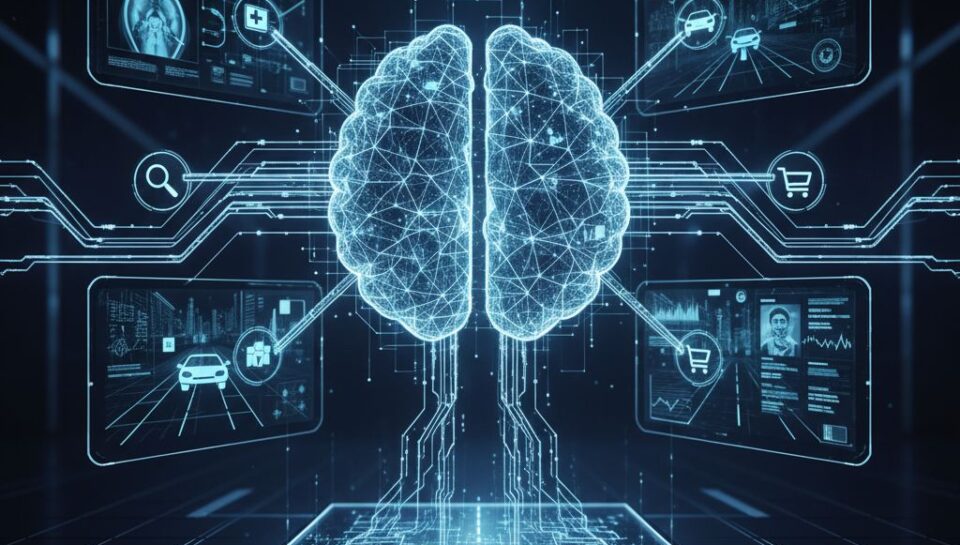
Introduction: Why Data Annotation Is the Backbone of AI
Artificial intelligence is only as strong as the data that powers it. In the U.S., industries ranging from healthcare to autonomous vehicles rely on artificial intelligence data annotation to build smarter, safer, and more reliable systems. Annotation transforms raw images, videos, audio, and text into structured training datasets, enabling AI models to learn, adapt, and perform with precision.
What Is Artificial Intelligence Data Annotation?
Artificial intelligence data annotation is the process of labeling data so that machines can understand it. Depending on the modality, annotation may include:
- Image Annotation: Bounding boxes, polygons, semantic segmentation for visual recognition.
- Video Annotation: Frame-by-frame tracking, object detection, and activity recognition.
- Text Annotation: Named entity recognition, sentiment tagging, and classification.
- Audio Annotation: Speaker diarization, transcription, and emotion labeling.
- LiDAR Annotation: 3D cuboids, point cloud segmentation, and sensor fusion alignment.

Why U.S. Companies Need AI Data Annotation
- Healthcare: Annotating MRIs, ultrasounds, and pathology slides ensures diagnostic AI aligns with clinical standards.
- Autonomous Vehicles: LiDAR and video annotation allow safer navigation on U.S. roads.
- E-commerce: Product tagging and catalog annotation improve search accuracy and customer experience.
- Finance: Document annotation and sentiment analysis strengthen compliance and fraud detection.
The Challenges of AI Data Annotation
- Scale: Millions of data points are required for training.
- Accuracy: Even small annotation errors can derail outcomes in critical sectors.
- Bias: Poorly annotated datasets risk embedding systemic bias into AI.
- Security: Sensitive data (e.g., patient records, financial documents) requires strict compliance.
Evaluating Data Annotation Partners in the U.S.
When outsourcing, U.S. companies should assess:
- Accuracy benchmarks and QA processes
- ISO and HIPAA compliance certifications
- Tool integration and flexibility
- Case studies from relevant industries
- Transparency through reporting and dashboards
How Prudent Partners Delivers AI Data Annotation
Prudent Partners specializes in annotation with:
- 99%+ accuracy across all data types
- ISO 9001 & ISO/IEC 27001 certification for quality and security
- 300+ trained analysts with domain expertise in healthcare, finance, defense, and retail
- Prudent PlanWise, our proprietary performance management tool for complete visibility
For U.S. enterprises, we provide scalable, secure, and high-quality annotation pipelines tailored to industry needs.
Conclusion: Building Smarter AI with Better Data
Artificial intelligence data annotation is not a back-office task—it is the foundation of trustworthy AI. For U.S. companies, outsourcing to an experienced partner like Prudent Partners ensures data is accurate, secure, and ready to power next-generation innovations.
FAQs
1. What is artificial intelligence data annotation used for?
It prepares data for training AI models in healthcare, finance, e-commerce, and more.
2. Why is annotation quality critical in the U.S. market?
High accuracy ensures compliance, safety, and performance in regulated industries like healthcare and automotive.
3. How does Prudent Partners ensure accuracy?
Through multi-layer QA, domain-trained annotators, and transparent dashboards powered by Prudent PlanWise.