
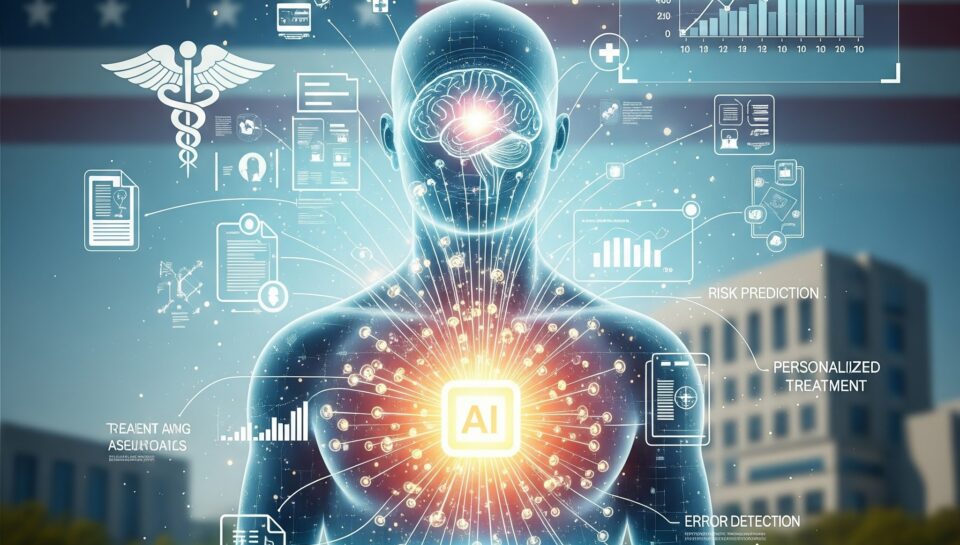
Introduction: The Promise and Peril of Generative AI in Healthcare
Generative AI is rapidly transforming the healthcare landscape in the United States — from diagnostic imaging and drug discovery to virtual patient assistants. But as innovation accelerates, one question looms large: how can we ensure that AI-generated healthcare data is accurate, compliant, and safe?
That’s where generative AI QA healthcare USA comes in. Quality assurance (QA) is not just a checkpoint — it’s the backbone that determines whether an AI system is trustworthy enough to be used in clinical or research settings. At Prudent Partners, we specialize in validating AI-generated outputs to ensure consistency, precision, and regulatory alignment in healthcare environments.
What Is Generative AI QA in Healthcare?
Generative AI QA healthcare USA refers to the process of evaluating and verifying AI-generated medical data — including text, images, and structured reports — for accuracy, bias, and compliance.
For example:
- Verifying AI-generated radiology summaries for factual accuracy.
- Ensuring that medical chatbot outputs are safe and HIPAA-compliant.
- Validating generative models that synthesize synthetic patient data for research.
- Reviewing diagnostic suggestions from multimodal AI models to ensure reliability.
Simply put, QA ensures that generative AI outputs can be trusted — both medically and ethically.
Why Generative AI QA Is Essential in U.S. Healthcare
1. Patient Safety Comes First
AI-generated recommendations directly influence patient outcomes. Even minor inaccuracies can lead to misdiagnoses or treatment delays.
2. Regulatory Compliance
In the U.S., healthcare AI must adhere to HIPAA, FDA, and HITECH standards. QA ensures data handling and AI behavior comply with these laws.
3. Ethical AI Use
Bias and misinformation in generative AI can create systemic inequalities in care delivery. QA ensures fairness and accountability.
4. Model Interpretability
Proper QA frameworks help clinicians and data scientists understand how AI systems arrive at decisions.
5. Institutional Trust
Hospitals, insurers, and regulators only adopt AI solutions that have proven QA-backed reliability.
Key Components of Generative AI QA Healthcare USA
1. Data Validation
Checking the source and quality of training data to prevent bias or misinformation from influencing results.
2. Output Accuracy Testing
Evaluating AI-generated text, images, or summaries for correctness and completeness.
3. Compliance Review
Verifying adherence to privacy laws (HIPAA, GDPR) and U.S. medical ethics standards.
4. Bias Detection
Identifying and mitigating demographic or socioeconomic bias in model outputs.
5. Feedback Loop Integration
QA results feed back into model retraining, improving accuracy over time.
Use Cases of Generative AI QA in U.S. Healthcare
1. Diagnostic Imaging QA
Verifying AI-generated radiology, CT, or MRI summaries for accuracy before doctor approval.
2. Synthetic Data Generation
Ensuring synthetic patient datasets are statistically valid and privacy-safe for research.
3. Clinical Documentation Support
Evaluating AI-generated clinical notes or discharge summaries for clarity and correctness.
4. Virtual Health Assistants
Testing AI chatbots for correct responses and safe triage suggestions.
5. Medical Translation and Summarization
Ensuring AI-generated multilingual summaries maintain medical precision across languages.
Challenges in Generative AI QA Healthcare USA
- Data Privacy Risks: Handling sensitive PHI (Protected Health Information) securely during QA.
- Bias and Ethics: Detecting subtle algorithmic biases in generative models.
- Explainability Gaps: Some models act as “black boxes,” making QA complex.
- Regulatory Variability: Differing standards across states and healthcare systems.
- Volume and Complexity: Managing millions of generated outputs efficiently.
Prudent Partners’ Approach to Generative AI QA in Healthcare
At Prudent Partners, we’ve built a structured QA framework designed for clinical-grade reliability.
1. Multi-Layer Review
Each AI output is verified by data analysts, domain experts, and QA leads to ensure 99%+ accuracy.
2. Secure Infrastructure
All workflows comply with ISO 9001 and ISO/IEC 27001 certifications, with HIPAA compliance baked into every process.
3. Domain-Trained Analysts
Our QA specialists are trained in medical annotation, clinical documentation, and biomedical research review.
4. Automation + Human Review
We combine automated validation scripts with manual audits for scalability and precision.
5. Prudent PlanWise Oversight
Our in-house performance tracking tool, Prudent PlanWise, provides full transparency into accuracy metrics and QA cycles.
Real-World Applications in the U.S. Market
Healthcare AI Startups
QA ensures model outputs meet FDA submission standards and can be safely commercialized.
Hospitals & Clinics
Validating AI-powered imaging and record-keeping systems for integration with EHR platforms.
Pharma & Biotech
Testing AI-generated chemical simulations and lab reports for reproducibility.
Insurance & Claims
Reviewing AI-driven claim processing for accuracy and fairness in adjudication.
Academic Research
Ensuring synthetic data and language models meet institutional review board (IRB) requirements.
Benefits of Generative AI QA Healthcare USA
- Accuracy & Safety: Eliminates risk of AI-generated medical misinformation.
- Compliance Confidence: Meets HIPAA, FDA, and state regulatory standards.
- Ethical Integrity: Promotes unbiased, transparent, and equitable AI deployment.
- Operational Efficiency: Reduces rework and accelerates go-to-market for AI healthcare products.
- Patient Trust: Builds confidence in the adoption of AI-driven healthcare systems.
External Perspective: The U.S. Healthcare AI Market
According to PwC and MarketsandMarkets, the U.S. healthcare AI market will reach $120 billion by 2030, with QA and validation emerging as key growth drivers. Reports highlight that “AI without validation is a risk multiplier, while AI with structured QA becomes a force multiplier.”
(Source: PwC Healthcare AI Report)
Why U.S. Healthcare Leaders Choose Prudent Partners
- Dedicated healthcare QA specialists with clinical data experience.
- HIPAA-compliant workflows ensuring full patient privacy.
- Tool-agnostic integrations with client EHR and AI pipelines.
- 99%+ validation accuracy across multimodal datasets.
- Transparent reporting via Prudent PlanWise for continuous QA improvement.
We act as a quality-first partner, ensuring your AI doesn’t just perform—it performs safely.
Internal Links: Explore Related Prudent Partners Services
Conclusion: Building Trust in Medical AI Starts with QA
The future of healthcare depends not only on innovation but also on integrity. As generative AI systems reshape patient care, it’s crucial to ensure that every algorithm operates safely and ethically.
At Prudent Partners, we help U.S. healthcare organizations transform generative AI from a promising tool into a dependable ally. Through structured validation and domain-driven QA, we make sure every AI-generated decision is grounded in accuracy, accountability, and compassion.
FAQs
1. What does generative AI QA in healthcare involve?
It focuses on verifying the accuracy and ethics of AI-generated medical data.
2. Why is QA essential for U.S. healthcare AI?
Because it ensures patient safety, compliance, and trust in AI-driven care systems.
3. How does Prudent Partners ensure QA accuracy?
Through domain-trained analysts, ISO-certified workflows, and Prudent PlanWise performance tracking.