
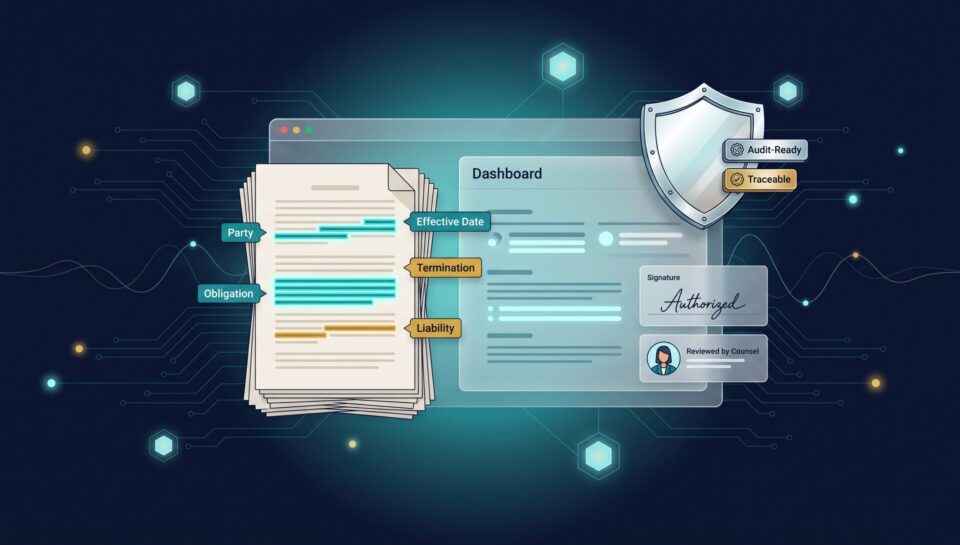
Legal AI has become one of the fastest-moving applications of language models: contract review, due diligence, discovery, clause extraction, and research assistance. All of it depends on annotated legal data, and legal documents are among the least forgiving material to annotate well. The language is deliberately precise, the distinctions that matter are often invisible to a non-specialist, and the documents themselves carry confidentiality and privilege obligations that shape how the work can be done at all. This guide covers what legal data annotation involves and how to evaluate a partner for it.
Why Legal Documents Are Difficult
Precision is the point. Legal drafting uses specific words for specific reasons, and near-synonyms are not interchangeable. "Shall" and "may" allocate obligation differently. "Best efforts" and "reasonable efforts" are distinct standards. An annotator who treats these as stylistic variation destroys the signal the model needs.
Meaning depends on structure. A clause means what it means partly because of where it sits, what it references, and what defined terms it invokes. Annotation that treats a clause as standalone text loses the cross-references and definitions that determine its effect.
The important distinctions are subtle. Whether an indemnity is capped, whether a limitation applies to a specific category, whether a notice period runs from receipt or dispatch. These turn on small textual differences that a general annotator will not reliably notice.
Documents are long and internally dependent. A definition on page three governs a clause on page forty. Annotation processes that chunk documents without preserving those dependencies produce labels that are locally correct and globally wrong.
Format is often hostile. Scanned agreements, inconsistent numbering, and executed copies with handwritten amendments all have to be handled before annotation begins. Ouroptical character recognition work covers the extraction layer.
What Gets Annotated
Clause identification and classification. Marking clause types across agreements that use different headings and drafting conventions for the same substance.
Entity and defined-term extraction. Parties, dates, jurisdictions, amounts, and defined terms, with their cross-references intact. This builds on establishednamed entity recognition work applied to legal language.
Obligation and right extraction. Who must do what, by when, subject to what conditions, which is the structure most legal AI applications actually need.
Risk and deviation labeling. Marking where a clause deviates from a standard position, which requires knowing the standard position.
Document classification and relationship mapping. Identifying document type and how documents relate: amendments, schedules, side letters, and which supersedes which.
Confidentiality and Privilege Change the Operating Model
This is the dimension that most distinguishes legal annotation from other domains.
Legal documents are confidential by default and frequently privileged. That has practical consequences: who may see the material is constrained, sometimes contractually and sometimes by professional obligation; work may need to occur in controlled environments rather than on annotator devices; and the client's own obligations to their clients flow through to any vendor.
Law firm and in-house buyers increasingly expect the same certifications enterprise buyers do, which is exactly what the market is searching for: quality, turnaround, and compliance across SOC 2, ISO, and GDPR in a single evaluation. A legal annotation partner should be able to speak to all of it without deflection. Our guide tosecurity and compliance in AI data services context sits alongside this.
The Expertise Question
Legal annotation sits at an uncomfortable point: it needs enough legal understanding to make correct distinctions, at a volume and price that qualified lawyers reviewing every document would not support.
The workable answer is layered. Legally trained people define the annotation scheme and resolve hard cases. Trained annotators, working to detailed guidelines with worked examples, handle the volume. A meaningful sample gets legally informed review, and disagreement rates determine whether guidelines need tightening. What does not work is either extreme: unqualified annotators with a glossary produce confidently wrong labels, and full lawyer review of every document is economically unviable for most datasets.
The measurement discipline matters more here than almost anywhere, because in legal text a plausible-looking wrong label is very hard to spot downstream. Ourannotation quality guide covers measured agreement, which is the mechanism that surfaces guideline ambiguity before it contaminates a dataset.
Evaluating a Legal Annotation Partner
The questions that matter: who defines the annotation scheme and what legal background do they have; how are hard cases escalated and resolved; what proportion of work receives legally informed review; how do you handle confidentiality, privilege, and the operating environment; what certifications do you hold and what is their scope; how do you preserve cross-references and defined terms across long documents; and will you pilot on our genuinely difficult agreements rather than clean templates.
Turnaround deserves specific attention in legal work because deal timelines are unforgiving, and a partner should be able to state realistic throughput for your document complexity rather than a generic rate.
Common Questions From Legal AI Teams
What makes legal documents hard to annotate?
Precision matters because near-synonyms carry different legal effect, meaning depends on structure and cross-references, the important distinctions are subtle, documents are long with internal dependencies, and formats are frequently scanned or inconsistent.
What gets annotated in legal data?
Clause identification and classification, entity and defined-term extraction with cross-references, obligations and rights with conditions, deviation from standard positions, and document type and relationships.
Do legal annotators need to be lawyers?
Not all of them. The workable model is layered: legally trained people define the scheme and resolve hard cases, trained annotators handle volume against detailed guidelines, and a meaningful sample receives legally informed review.
How does confidentiality affect legal annotation?
It constrains who may see the material and often where the work can happen, and the client's obligations to their own clients flow through to the vendor. Controlled environments are frequently required rather than optional.
What certifications should a legal annotation vendor hold?
Buyers typically expect SOC 2 and ISO 27001 with scope covering the actual delivery, plus GDPR-compliant handling where EU personal data is involved. Check the scope statement rather than the badge.
Why do cross-references and defined terms matter so much?
Because a definition early in a document governs clauses far later. Annotation that chunks documents without preserving those dependencies produces labels that are locally correct and globally wrong.
How is quality measured in legal annotation?
Through measured agreement between independent reviewers, which surfaces guideline ambiguity before it contaminates the dataset. This matters more in legal text because a plausible wrong label is hard to detect downstream.
What should I ask about turnaround?
Ask for realistic throughput on your actual document complexity rather than a generic rate, since deal timelines are unforgiving and complexity varies enormously across agreement types.
Working With Prudent Partners
Prudent Partners Private Limited provides legal document annotation for US legal AI teams: clause classification, entity and defined-term extraction with cross-references preserved, obligation mapping, and deviation labeling, delivered under documented confidentiality controls with measured reviewer agreement and legally informed review of sampled work. See ournamed entity recognition andtext annotation capabilities.
The first conversation is a 30-minute scoping call about your document types, the distinctions your model needs to make, and your confidentiality requirements. No commitment to go further.